How Intimate Senior Care Homes Transform Dementia Support
@sethfrys971
September 30, 2026 · 19 min read
Business Name: BeeHive Homes of Clovis
Address: 2305 N Norris St, Clovis, NM 88101
Phone: (505) 591-7025
BeeHive Homes of Clovis
Beehive Homes of Clovis assisted living care is ideal for those who value their independence but require help with some of the activities of daily living. Residents enjoy 24-hour support, private bedrooms with baths, medication monitoring, home-cooked meals, housekeeping and laundry services, social activities and outings, and daily physical and mental exercise opportunities. Beehive Homes memory care services accommodates the growing number of seniors affected by memory loss and dementia. Beehive Homes offers respite (short-term) care for your loved one should the need arise. Whether help is needed after a surgery or illness, for vacation coverage, or just a break from the routine, respite care provides you peace of mind for any length of stay.
2305 N Norris St, Clovis, NM 88101
Business Hours
Walk into a typical institutional facility and you often feel it within seconds: the scale, the sound, the long corridor smell of disinfectant. Then walk into a well run intimate senior care home and the contrast is practically jarring. You might pass a small front garden with herbs, hear one employee humming while assisting a resident butter toast, notice a pot of soup simmering in an open kitchen. Same broad category on paper, really different lived experience.
For people dealing with dementia, that difference is not cosmetic. It can form state of mind, function, security, and sense of self, day after day. Intimate care homes are changing how we think of assisted living, memory care, and senior care overall, specifically for those who can not safely stay in their previous homes yet do improperly in big institutional settings.
This is not a magic design. It resolves some issues and produces others. But when it is done well, little scale, relationship based care can reframe dementia support from handling decline to supporting an individual's staying life.
What "intimate senior care homes" actually are
The term covers a variety of settings, and that obscurity often puzzles families comparing options.
At its core, an intimate senior care home is a little house, usually in a routine area, where senior care a limited variety of older grownups cohabit and get 24 hour assistance. Some are certified as assisted living, some as residential care homes, and some as specialized memory care homes. Regulations differ by state or region, but capability usually runs from 4 to 16 citizens, often clustered in groups of 6 to 10.
Several functions tend to specify the model:
Residents live in a home like environment with a common living-room, dining space, and cooking area, often with private or semi private bedrooms.
Staff invest nearly all day in shared spaces with residents, rather of working from a distant nursing station.
Schedules are more flexible and customized. Breakfast may be staggered instead of served greatly at 8:00 a.m. For everyone.
Families typically have better access to leadership. Instead of a multi layer hierarchy, there might be one administrator and one care manager that families know by given name and phone number.
These homes sit somewhere in between conventional assisted living and formal nursing homes. Many supply memory care and even hospice level assistance, however in a setting that looks and feels like a routine house.
Why the environment matters so much for dementia
Dementia does not simply remove memory. It changes how people process light, sound, pattern, and regimen. A big structure with long corridors, overhead paging, rotating staff, and constant transitions can overwhelm somebody whose brain is already operating at the edge of capacity.
In small homes, numerous ecological distinctions matter:
Fewer people suggests less sensory overload. Rather of dozens of homeowners moving, there might be 6 to 10.
Short sightlines and familiar spaces make it easier to find the bathroom, bed room, or kitchen, even as orientation declines.
Household rhythms are more foreseeable. The same armchair, the very same table, the same hallway to the bedroom, day after day.
Staff faces become deeply familiar. In an excellent home, citizens hardly ever satisfy real complete strangers, which lowers anxiety and resistance to care.
These nuances sound small on paper, but they collect. A resident who is less overwhelmed is less most likely to roam, less most likely to snap in disappointment, more likely to eat and sleep consistently, and more able to take pleasure in small moments of day-to-day life.
The shift from job based to relationship based care
In big institutional designs, staffing ratios and workflows tend to press care into jobs: bathing, dressing, toileting, medication rounds, meal help. Staff are assessed on whether those boxes are checked within a shift.
Intimate senior care homes have the opportunity, and the obstacle, to organize around relationships instead.
Instead of a caretaker moving down a long passage with a med cart, that very same worker may invest most of the day nearby in the kitchen and living-room, preparing meals, cueing homeowners toward the bathroom, helping at the table, folding laundry with them. Medication administration still takes place, but it feels like one part of an ongoing interaction.
Over time, personnel discover each resident's peculiarities in a manner that is hard to attain in a 100 bed structure. They notice that Mr. R declines showers on days when the television is too loud in the morning, or that Ms. T consumes much better if her tea is served in the flower mug that resembles the ones she used at home.
With dementia care, these observations are hardly ever composed in handbooks. They surface only when individuals spend unhurried time together. Intimate homes, when appropriately staffed, make that possible.
How daily life feels and look different
A family who has only seen large assisted living facilities typically asks, "What is my mother going to do all the time in a little home?" The worry is easy to understand. In a 150 resident building, the glossy activities calendar looks reassuring: bingo, crafts, exercise class, pleased hour.
Yet dementia moves the worth of scheduled group activities. For lots of mid to late stage citizens, quieter, easier, repeated routines are far more significant and manageable than a thick calendar.
In many intimate homes, daily life is constructed around home jobs and familiar conveniences:
Residents might assist set the table or dry dishes after lunch, guided carefully by staff.
Mornings might unfold with a slower pace, someone up at 7, another at 9, each receiving assist with dressing and grooming when they are more alert and cooperative.
Instead of one devoted activity director, every caregiver ends up being an activity facilitator. An employee folding towels may hand a stack to a resident to "assist me out," turning a required chore into engagement.
Music, aromatherapy from real cooking, a feline wandering through the living room, or a brief walk in a fenced lawn can work as meaningful stimulation that aligns with a person's staying abilities.
This does not indicate major shows disappears. A well run memory care home, even a little one, utilizes evidence based approaches such as Montessori motivated activities, recognition methods, and structured sensory experiences. The distinction is that these components are woven into the material of the day, not separated into a one hour slot in a big activity room.
Advantages for people coping with dementia
No model is perfect, and results constantly differ, however specific advantages of intimate homes repeat frequently in practice.
Emotional safety improves when homeowners acknowledge their surroundings and individuals around them. Anxiety, pacing, and agitation frequently decline after the initial adjustment duration, which can in turn lower the requirement for sedating medications.
Physical security can likewise enhance just because personnel can see and hear more. In a little home, there are fewer blind corners for a fall to go unnoticed, fewer long hallways where somebody can roam far before staff recognize it. When a caretaker invests the morning cooking within a couple of steps of the living area, they can redirect an agitated resident quickly or notice subtle signs of disease earlier.
Health routines end up being more consistent. Consuming, drinking, toileting, and health mix into household patterns. A staff member who pours coffee for everyone can likewise use water throughout the day without leaving a system unstaffed or diminishing a long corridor.
Sense of identity is simpler to preserve in a home that feels like a home. A resident can be the "teacher" reading aloud, the "helper" drying dishes, the "garden enthusiast" watering pots on the deck. Those roles matter as cognition fades; they anchor an individual in something besides the identity of "patient."
More nuanced communication establishes in between residents and personnel. Caregivers who work with the exact same 6 to 10 individuals every day start to recognize non spoken cues that may be missed out on in a large building where tasks shuffle constantly.
How this modifications life for families
Families caring for someone with dementia are not just buying a bed and meals. They are attempting to hand over some of the obligation and stress that has actually eroded their own health and relationships.
In intimate homes, households frequently describe a number of differences compared to larger centers:
They can reach decision makers more easily. If an issue develops, there are less layers between the person who answers the phone and the individual who can change staffing, menu, or care plans.
Visits tend to feel personal rather than transactional. Walking into a small living-room where your father is sitting at the table with three other residents feels extremely various than coming to a 3 story building where you check in and then search a flooring of identical doors for his room.
Care conferences can be more comprehensive, since the personnel actually understand the resident's regimens. When a nurse informs you, "Your mother appears more puzzled after lunch for the recently," it is based upon observing the very same three or four people daily, not comparing notes throughout dozens.
Respite care becomes more reliable. Short-term stays in intimate homes can give family caretakers an authentic break while decreasing disruption for the individual with dementia. When the exact same small personnel and environment exist, even a weeklong stay feels less like "moving" and more like sleeping at a familiar cousin's house.
None of this gets rid of regret or grief, however it alters the relationship in between family and center from adversarial monitoring to real partnership regularly than in larger, more bureaucratic settings.

Staffing realities: the excellent, the bad, and the fragile
Everything favorable about little homes depends on staffing. That is both their strength and their vulnerability.
On the favorable side, caretakers in intimate homes often report more task satisfaction. They can see the results of their work in actual time, construct long term bonds, and exercise more judgment than in shift driven, task heavy environments. Turnover, while still an obstacle, can be lower when management invests in training and support.
Yet the very same little scale implies that a person resignation or disease can destabilize the entire home. A team member who has worked days for 3 years knows resident patterns in great detail. When that individual leaves suddenly, the loss is felt not just on the schedule however in everyday micro decisions: which resident needs more time in the bathroom, who prefers tea before medication, who will accept care just from a familiar face.
From a medical standpoint, this makes training and backup systems essential. Intimate homes that grow tend to:
Invest in dementia specific training for each staff member, including cooks and housekeepers.
Cross train employees so that individuals can enter multiple roles throughout short staffing without essential tasks being missed.
Build strong relationships with home health, hospice, and going to clinicians to supply extra medical assistance without requiring homeowners to move.
Pay more attention to staff emotional resilience. Supporting people with dementia in close proximity can be both gratifying and draining. Without debriefing and assistance, burnout creeps in quickly.
Families exploring such homes ought to not be shy about asking pointed questions concerning staffing ratios, night coverage, use of firm personnel, and period of present caregivers. The intimacy of a home magnifies any staffing weakness.
Comparing small homes with large facilities
For some households, a larger assisted living or memory care facility may still be the better fit. Complex medical needs, really minimal budgets, preferred areas, or a desire for a large range of amenities can tilt the balance.
An easy method to take a look at the contrast is to focus on daily trade offs:
-
Scale versus familiarity. Large facilities can use more features and specialized staff, yet homeowners might deal with sound and confusion. Little homes trade breadth of services for a closer, quieter community.
-
Medical intricacy. Citizens with extensive medical equipment or regular interventions often need the infrastructure of a nursing home level facility. Lots of intimate homes can handle moderate dementia care, consisting of diabetes, oxygen, or moderate behavioral symptoms, but not innovative ventilator needs or continuous IV therapies.
-
Cost structure. Little homes frequently consist of greater staff time per resident and home like environments, which may indicate greater monthly charges in some markets. In other locations, especially where housing costs are lower, they can be comparable or a little less than big assisted living neighborhoods. Openness around what is consisted of and what sustains additional charges matters more than the label on the building.
-
Social preferences. Some individuals with early or moderate dementia delight in a larger social circle, access to group classes, and regular getaways. Others retreat in such environments and flourish in a smaller sized, more foreseeable setting. Personality before dementia typically forecasts which course works better.
The secret is to line up the environment with the real person, not the idealized resident in marketing brochures.
Where respite care fits into the picture
Respite care is often treated as an afterthought in traditional senior care: a few short term beds in a corner of a big building, utilized when readily available. In intimate homes, it can act as a tactical tool in dementia support.
When families use respite early, for a weekend or a couple of days at a time, the individual with dementia has a possibility to get to know the home, personnel, and routines while still having the anchor of going "back home" later. The next stay feels less foreign. Gradually, if a long-term move becomes essential, the transition can be gentler due to the fact that the resident currently recognizes the kitchen, the chairs on the porch, and a couple of staff members.
From the service provider side, respite provides the home an opportunity to assess fit. Not every resident works well in a small house. Severe hostility, wandering that can not be managed even with close supervision, or intense nighttime habits may prove too disruptive for a tiny neighborhood. A brief stay reveals those realities better than any paper assessment.
Families must ask how a home utilizes respite:
Do respite guests take part in the very same routines as long term locals, or are they "parked" in their rooms?
How are households updated throughout the stay?
Is respite used as a pathway to longer term admission, or purely as a standalone service?
Thoughtful respite programs protect both the stability of the small home and the needs of stressed out caretakers at home.
Practical checklist for examining an intimate senior care home
During a tour, sensory impressions and discussion can blur together. A basic checklist can assist you notice information that anticipate great dementia care.
-
Observe the atmosphere within the very first one minute. Are you greeted immediately? Can you see staff interacting with locals, or prevail locations empty and silent while tvs blare?
-
Ask about staffing patterns, not just ratios. Who is awake at night? What takes place when somebody calls out at 2 a.m.? The number of company or temporary employees were used in the last month?
-
Watch how personnel talk with homeowners. Do they use names, eye contact, and gentle touch where proper? When someone resists care or appears puzzled, do personnel respond with patience and options, or with rushed insistence?
-
Look in the kitchen and bathrooms. Is genuine cooking occurring, or is whatever boxed and reheated? Are bathrooms tidy, safe, and equipped with materials that appear like what an older grownup might have used at home?
-
Ask for specific examples. Rather of "Do you provide tailored dementia care?", ask "Tell me about a resident whose behavior enhanced here and what you changed for them."
The more concrete and comprehensive the responses, the most likely the home really lives its approach instead of reciting it.
Policy and system level implications
The rise of intimate senior care homes raises questions for regulators, payers, and communities.
Licensing rules originally written for big facilities in some cases struggle to fit small homes. Requirements such as industrial grade cooking areas or large double loaded corridors may not make sense in a 6 bed home. Thoughtful regulators are beginning to craft tiered guidelines that maintain safety without forcing homelike environments to imitate institutions.
Payment designs remain a barrier. In most regions, these homes run on personal pay funds, with just limited assistance from long term care insurance coverage or public programs. Middle class households often discover themselves in an agonizing squeeze: too much income to get approved for subsidies, inadequate to pay forever out of pocket. As the proof base grows around the advantages of small scale dementia care, policymakers will need to choose whether and how to incorporate these homes into publicly funded senior care options.
On a community level, next-door neighbors in some cases resist the idea of a care home on their street. Worries about traffic, residential or commercial property worths, or "institutional creep" surface area. Yet research study on well run residential care homes shows minimal impact on neighborhoods, and in some cases positive spillover when homes offer local jobs and preserve homes that might otherwise deteriorate.
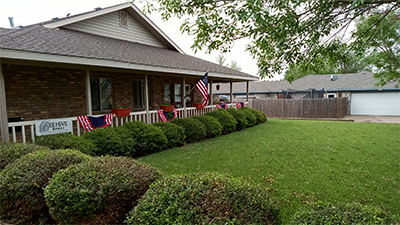
Public education matters here. Understanding that a peaceful, well kept home with a little indication by the door can be a place of self-respect and safety for next-door neighbors' parents or grandparents assists soften resistance.
Choosing the right setting for a special person
Dementia care is not a one size path. Some individuals remain at home with assistance till the very end. Others move through numerous levels of assisted living and memory care over years. Still others support and even flourish after moving into a well matched intimate senior care home.
When households sit around a kitchen area table discussing choices, the conversation often concentrates on expense, distance, and regret. Those factors are genuine and can not be neglected. Yet it assists to add a couple of more concerns:
Where will this individual feel most like themselves, even as their abilities change?
Which environment gives personnel the best opportunity to really understand and react to them?
How will this option affect the rest of the family's health, work, and relationships over the next year, not simply the next month?
Intimate senior care homes do not eliminate the heartbreak of dementia. They can not resolve every behavioral, medical, or monetary issue. They do, nevertheless, create a scale and culture of care that aligns much better with how a susceptible brain navigates the world.
For numerous households, that alignment turns care from a continuous crisis into a series of manageable days. And for the individual dealing with dementia, those days, sewn together quietly in a cottage, are where the rest of life in fact happens.
BeeHive Homes of Clovis provides assisted living care
BeeHive Homes of Clovis provides memory care services
BeeHive Homes of Clovis provides respite care services
BeeHive Homes of Clovis supports assistance with bathing and grooming
BeeHive Homes of Clovis offers private bedrooms with private bathrooms
BeeHive Homes of Clovis provides medication monitoring and documentation
BeeHive Homes of Clovis serves dietitian-approved meals
BeeHive Homes of Clovis provides housekeeping services
BeeHive Homes of Clovis provides laundry services
BeeHive Homes of Clovis offers community dining and social engagement activities
BeeHive Homes of Clovis features life enrichment activities
BeeHive Homes of Clovis supports personal care assistance during meals and daily routines
BeeHive Homes of Clovis promotes frequent physical and mental exercise opportunities
BeeHive Homes of Clovis provides a home-like residential environment
BeeHive Homes of Clovis creates customized care plans as residents’ needs change
BeeHive Homes of Clovis assesses individual resident care needs
BeeHive Homes of Clovis accepts private pay and long-term care insurance
BeeHive Homes of Clovis assists qualified veterans with Aid and Attendance benefits
BeeHive Homes of Clovis encourages meaningful resident-to-staff relationships
BeeHive Homes of Clovis delivers compassionate, attentive senior care focused on dignity and comfort
BeeHive Homes of Clovis has a phone number of (505) 591-7025
BeeHive Homes of Clovis has an address of 2305 N Norris St, Clovis, NM 88101
BeeHive Homes of Clovis has a website https://beehivehomes.com/locations/clovis/
BeeHive Homes of Clovis has Google Maps listing https://maps.app.goo.gl/SMhM3zbKaKgR1UAX6
BeeHive Homes of Clovis has TikTok page https://tiktok.com/@beehivehomes_clovis
BeeHive Homes of Clovis has Facebook page https://www.facebook.com/beehiveclovis
BeeHive Homes of Clovis has Instagram page https://www.instagram.com/beehivehomesclovis/
BeeHive Homes of Clovis has an YouTube page https://www.youtube.com/@WelcomeHomeBeeHiveHomes
BeeHive Homes of Clovis won Top Assisted Living Homes 2025
BeeHive Homes of Clovis earned Best Customer Senior Service Award 2024
BeeHive Homes of Clovis placed 1st for Senior Living Communities 2025
People Also Ask about BeeHive Homes of Clovis
What is BeeHive Homes of Clovis Living monthly room rate?
The rate depends on the level of care that is needed. We do a pre-admission evaluation for each resident to determine the level of care needed. The monthly rate is based on this evaluation. There are no hidden costs or fees
Can residents stay in BeeHive Homes until the end of their life?
Usually yes. There are exceptions, such as when there are safety issues with the resident, or they need 24 hour skilled nursing services
Do we have a nurse on staff?
No, but each BeeHive Home has a consulting Nurse available 24 – 7. if nursing services are needed, a doctor can order home health to come into the home
What are BeeHive Homes’ visiting hours?
Visiting hours are adjusted to accommodate the families and the resident’s needs… just not too early or too late
Do we have couple’s rooms available?
Yes, each home has rooms designed to accommodate couples. Please ask about the availability of these rooms
Where is BeeHive Homes of Clovis located?
BeeHive Homes of Clovis is conveniently located at 2305 N Norris St, Clovis, NM 88101. You can easily find directions on Google Maps or call at (505) 591-7025 Monday through Sunday 9:00am to 5:00pm
How can I contact BeeHive Homes of Clovis?
You can contact BeeHive Homes of Clovis by phone at: (505) 591-7025, visit their website at https://beehivehomes.com/locations/clovis/ or connect on social media via TikTok Facebook or YouTube
Take a drive to Cotton Patch Cafe. Cotton Patch Café serves homestyle comfort food suitable for assisted living, memory care, senior care, elderly care, and respite care family meals.